Section 1: Technical Assessment
The first part of this review focuses on the artist’s technical proficiency and the formal qualities of the work, including palette, composition, scale, materiality, and production process.
How does the reviewer assess the artist’s technique in terms of colour, form, texture, scale, materiality, medium, and process?
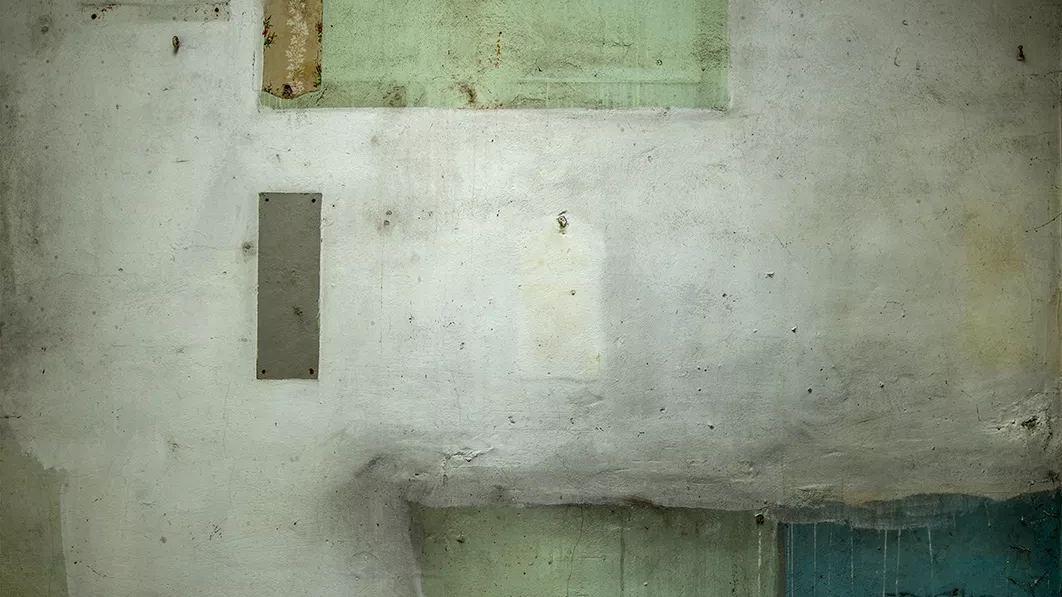
Mark De Roeck’s submitted portfolio comprises ten works—the maximum number permitted—and demonstrates a remarkable level of consistency in both artistic language and visual sensibility.
The works are archival colour photographs, produced as high-quality prints mounted on Dibond, emphasizing precision, durability, and a contemporary presentation format.
While the chromatic range varies from image to image, each work is governed by a restrained and carefully calibrated palette, contributing to the overall coherence of the series.
The photographs are presented in medium to large-scale landscape formats, allowing the viewer to engage fully with the spatial and formal qualities of the compositions.
Editions are intentionally limited, consisting of six prints plus one artist’s proof, balancing exclusivity with accessibility within the contemporary photography market.
Section 2: Artistic Assessment
The second part of this review considers the artistic, conceptual, and aesthetic dimensions of the portfolio.
What are the strengths of the portfolio?
The principal strength of Mark De Roeck’s selected body of work lies in its exceptional coherence. The photographs operate as a unified series, shaped by a consistent visual strategy and a clearly articulated artistic vision.
This cohesion manifests itself through the careful orchestration of composition, colour relationships, light, and the selection of graphic and architectural elements. Each image contributes meaningfully to the overall narrative while retaining its individual autonomy.
The works demonstrate a refined understanding of visual tension and balance. Contrasts of colour, form, and spatial relationships generate attraction and engagement, drawing the viewer into the image rather than creating distance or resistance.
Collectively, the portfolio reveals a mature photographic practice that successfully combines formal rigor with aesthetic clarity.
Where does the reviewer see opportunities for further development?
The submitted portfolio appears remarkably balanced and resolved. The works display a successful integration of the various formal and aesthetic parameters that contribute to a strong photographic series.
From a production perspective, however, I would encourage the artist to consider offering selected works as museum-quality prints on Hahnemühle FineArt paper through a certified printing partner. Such an approach could further enhance the material presence and collector appeal of the works.
Who or what might serve as a source of inspiration?
Inspiration should continue to be sought beyond the boundaries of photography and the visual arts. Theatre, literature, poetry, music, cinema, dance, and other artistic disciplines offer rich conceptual and emotional territories from which new ideas may emerge.
I suspect that Mark De Roeck already engages with a broad spectrum of cultural references. My recommendation would be to continue drawing upon those forms of artistic expression that resonate most deeply, allowing them to function as catalysts for future interventions and developments within the work.
I have no specific recommendations regarding particular artists or historical movements, as the portfolio already demonstrates a distinct and self-assured visual language.
Section 3: Market and Professional Assessment
How does the reviewer position the artist within the contemporary art market in terms of audience, pricing, and market potential?
Based on the submitted portfolio, I believe Mark De Roeck’s work possesses significant market potential. The strength of the series suggests that the artist is developing a practice capable of attracting both private collectors and professional audiences.
The next stage of growth will likely depend on sustained engagement with the broader art ecosystem, including curators, galleries, institutions, and other cultural intermediaries. Strategic visibility within these networks would considerably strengthen the artist’s market position and long-term trajectory.
The portfolio indicates that the artist is already moving in a promising direction and has established a solid foundation upon which to build further recognition.
Regarding pricing, I do not have sufficient information about the artist’s sales history, market positioning, or career stage to provide a definitive assessment. Assuming that current pricing structures are informed by a consistent sales record, they appear appropriate.
Conclusion
What is the most important advice the reviewer would offer this artist?
My advice follows naturally from the observations above.
Contemporary photography faces particular challenges within the art market. The reproducible nature of the medium, combined with the unprecedented abundance of images in contemporary culture, often affects the perceived value of photographic works.
For this reason, I would strongly encourage Mark De Roeck to continue strengthening his presence within professional art networks, particularly through collaborations with curators, galleries, institutions, and other cultural stakeholders. Such relationships play a crucial role in establishing context, visibility, and long-term value for photographic practices.
Above all, I hope this review proves both constructive and encouraging, supporting the continued evolution of an already compelling body of work.
This assessment is based exclusively on the submitted portfolio and should therefore be understood within the limits of its scope, context, and timeframe. It is not intended as a comprehensive evaluation of the artist’s entire practice or career. Rather, it responds to the specific framework of the Singulart review while taking into consideration the broader artistic intentions that may have informed the artist’s submission.